The Sacramento Kings. Last year this team went 22-44 which was good enough to put them at a tie with the New Jersey Nets for 5th worst in the NBA. The firing of Paul Westphal did little to derail the bullet train of suck. This goes to show you that the OKC model of building teams isn’t always the best way to go. They hit on guys like Cousins and Isaiah Thomas. But Tyreke Evans is fading fast and The Jimmer is doing everything is his power to make Shawn Bradley and Rafael Araujo not look like the biggest failures to come out of BYU. They did manage to land Thomas Robinson out of Kansas, who in my opinion, looks as if he'll become a certified man-beast.
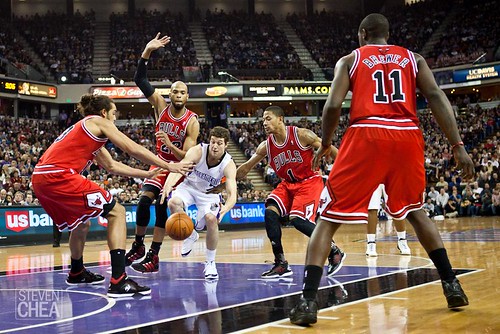
Another issue happens to be Tyreke Evans playing at small forward. In his first season he played at point guard, and while he did win rookie of the year, his mentality is to score first. So the obvious position for a 6-6 wing would be at shooting guard. Well thanks to Marcus Thornton and his 18.7 ppg, we now have Reke playing out of position. The drop off hasn’t been dramatic, he went from 20, 5.8, and 5.3 to 16.5 , 4.5, and 4.6. But still, that’s not the direction you want a young player like him going.
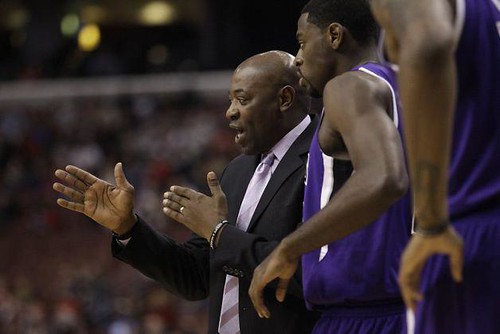
Last year, the Kings gave up the most points per game in the NBA. They had guys like Kobe and Durant getting boners at the mere thought of all those open lanes to the basket. With the roster mostly unchanged from a season ago, I expect this team to be right around what they were last year. Getting ran through by every offense in the NBA. Also, to say the Kings offense is inefficient would be an insult to every pee wee league basketball program in the nation. Perhaps Cousins will realize he's not a guard and will stay in the post. Perhaps Tyreke will just stop shooting three's. And perhaps The Jimmer will quit basketball and start up his rap career with his brother. But those things probably won't happen. If you enjoy long two's, ill advised threes, ridiculous passes, and piss poor defense, then you won't be disappointed by this team. The people of Sacramento should expect more of the same. Well, that is unless the Maloofs don't move the franchise to Anaheim, or Vegas, or Virginia Beach.
Holy Crap! This was a lot easier back in the Mountain West Conference.
On paper, this team should be pretty decent. They're young, athletic, and happen to be at least two deep at every position. So what’s the problem you ask? Well, one of the things Kings fans should be most excited about is Demarcus Cousins. Also, one of the things Kings fans should be most fearful of...is Demarcus Cousins. Simply put, he's the product of an unholy genetic splice of Rasheed Wallace and Zach Randolph. Think about it, he has every single good and bad quality of both players. He has fought a teammate, he's feuded with a coach, he shoots too many jumpers, and he's a league leader in techs. However, despite having the body of Erick Dampier, he can help carry the offensive load (18 ppg), he's a great rebounder (11 rpg), and has shown signs of being a decent defender (1.2 blocks and 1.5 steals) The talent is there. He just needs either a coach or a veteran player to put a boot square in his ass. If that doesn't work, tie him down and make him stare a picture of Andray Blatche for about five hours. "Hey Demarcus, if you don't pull your act together, this is what you will become."
I've heard of enabling, but this is ridiculous.
Ok Tyreke, I know you're a guard, but this year we need you to slide over and play a little power forward...You down?
Well folks, I sit here beaming like a proud papa as I watch Jason and Paul churn out thoughtful, entertaining material, but the search continues ever onward for for more contributors...a few posts back, someone asked about Glenn, whose work I had posted some time back.
Realizing I had completely forgotten about Glenn, I sent him an e-mail of apology recently and asked him if he would like to send a new post. Graciously, Glenn did just that, and below is the result. I think Glenn may well have the stuff...constructive thoughts are welcome.
ET
******************************
Chris Mullin Wins Finals MVP - In Irony
When it's not busy showing WNBA games or endless loops of the same off-season "analysis", NBA TV has been doing a fairly decent job of being a methadone clinic to my professional hoops addiction. Recently, I've been able to see Shaq murdering the Kings with 44, 21 and 7 blocks, and Reggie Miller spit on Spike Lee's heart. 2 X.
When games like this are on I can almost forget the pain of it not being October yet. That is until the commercials... In my cursed DVR-less condition, I wind up watching a lot of NBA TV ads. I say a lot, but in reality there are probably only about four of them.
There's the one about bleaching your sun deck which is really the least painful of the lot; the one for whatever home workout device is causing you to have to endure this month's onslaught of sweaty bare male torsos; about 5 straight minutes of looking at balding patterns as a disembodied voice explains that women like men better with a full head of their own hair; Montel's shining dome to drive that point home as he asks if you need money now (as he clearly does); and recently added to the fold is the one where Chris Mullin informs the viewership that "Defense wins championships".
Like most NBA TV commercials, this one gives the impression that it is deliberately fucking with you. Chris Mullin? Defense? Championships? To the highly basketball literate crowd that would be interested in watching a Hornets game from the nineties this can only be perceived as unspeakably absurd. I'm sure I don't have to tell any of you that Chris Mullin never won a championship, or that the Warriors squad he's best known for was one of the worst defensive teams in the league.
All of this begs the question; why Chris Mullin? You'd think whoever made this is just completely ignorant of basketball as a sport, yet someone on the staff managed the incredible task of dredging up a Mullin block from the archives to lend a straight face to what he's saying. Maybe Mullin was just too embarrassed when he got the script to point out "Uh, fellas. I didn't win anything. And I didn't play much defense either...". (To be fair, Mullin was probably one of the better defenders on those Warriors, but that just goes to show how far gone they were.) Maybe it's just basic economics: they didn't wanna pay for a more expensive spokesman, he may have needed some cash now. Perhaps, he is just genuinely passionate about pertussis.
Whatever the reasons for its existence, every time I hear his deadpan delivery of "Offense wins games, but defense wins championships" the irony gets rifer. One of these days it's gonna be too much to bear.
Realizing I had completely forgotten about Glenn, I sent him an e-mail of apology recently and asked him if he would like to send a new post. Graciously, Glenn did just that, and below is the result. I think Glenn may well have the stuff...constructive thoughts are welcome.
ET
******************************
Chris Mullin Wins Finals MVP - In Irony
When it's not busy showing WNBA games or endless loops of the same off-season "analysis", NBA TV has been doing a fairly decent job of being a methadone clinic to my professional hoops addiction. Recently, I've been able to see Shaq murdering the Kings with 44, 21 and 7 blocks, and Reggie Miller spit on Spike Lee's heart. 2 X.
When games like this are on I can almost forget the pain of it not being October yet. That is until the commercials... In my cursed DVR-less condition, I wind up watching a lot of NBA TV ads. I say a lot, but in reality there are probably only about four of them.
There's the one about bleaching your sun deck which is really the least painful of the lot; the one for whatever home workout device is causing you to have to endure this month's onslaught of sweaty bare male torsos; about 5 straight minutes of looking at balding patterns as a disembodied voice explains that women like men better with a full head of their own hair; Montel's shining dome to drive that point home as he asks if you need money now (as he clearly does); and recently added to the fold is the one where Chris Mullin informs the viewership that "Defense wins championships".
Like most NBA TV commercials, this one gives the impression that it is deliberately fucking with you. Chris Mullin? Defense? Championships? To the highly basketball literate crowd that would be interested in watching a Hornets game from the nineties this can only be perceived as unspeakably absurd. I'm sure I don't have to tell any of you that Chris Mullin never won a championship, or that the Warriors squad he's best known for was one of the worst defensive teams in the league.
All of this begs the question; why Chris Mullin? You'd think whoever made this is just completely ignorant of basketball as a sport, yet someone on the staff managed the incredible task of dredging up a Mullin block from the archives to lend a straight face to what he's saying. Maybe Mullin was just too embarrassed when he got the script to point out "Uh, fellas. I didn't win anything. And I didn't play much defense either...". (To be fair, Mullin was probably one of the better defenders on those Warriors, but that just goes to show how far gone they were.) Maybe it's just basic economics: they didn't wanna pay for a more expensive spokesman, he may have needed some cash now. Perhaps, he is just genuinely passionate about pertussis.
Whatever the reasons for its existence, every time I hear his deadpan delivery of "Offense wins games, but defense wins championships" the irony gets rifer. One of these days it's gonna be too much to bear.
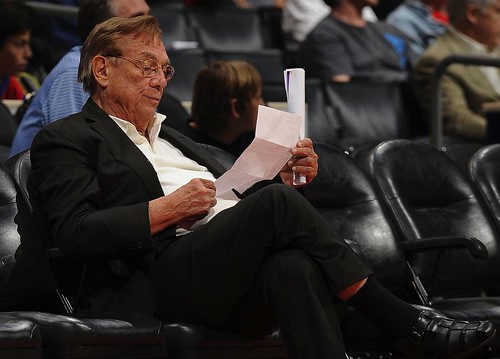
I figured that I would stay with the So Cal theme from last week and discuss the other Los Angeles team. The Clippers extended Blake Griffin, they brought back Chauncey Billups, and they brought in Jamaal Crawford. They swapped out Nick "Swaggy P" Young for Grant Hill. And maybe, just maybe, Lamar Odom can crawl himself out of his funk. Yes, by all accounts, this was a very good off season for the Clips. But it’s funny, no matter how many improvements the Clippers make, the Lakers ALWAYS seem to 1 up them. With the arrival of Dwight Howard, The Lakers figuratively put their hand on the Clipper's head and ruffled their hair. The Lakers are the handsome, successful older brother with a PHD and the model wife. The Clippers are the fat sibling with an under bite and a bankruptcy. I feel bad for Billy Crystal and the rest of Clipper nation. They just can’t win. However, I'm impressed with the moves the Clippers have made. Donald Sterling has dusted off the old checkbook and seems to actually care about...winning. (Donald Sterling and winning in the same sentence. Wow, can't believe I just typed that...I feel weird.)
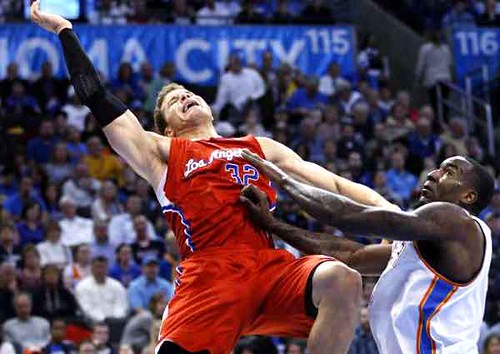
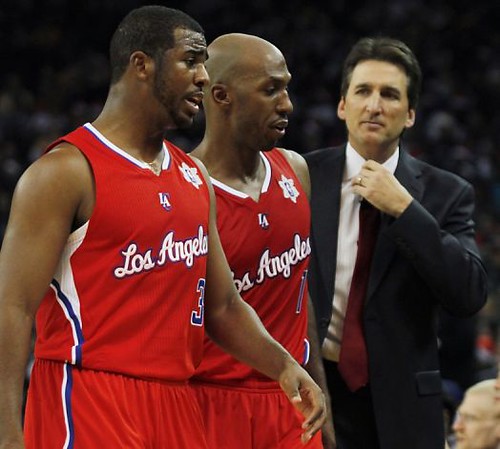
Despite what Vinny Del Negro believes, Chris Paul cannot simply do it all by himself. One of the issues in the last year was that CP3 simply wore down. Now that Chauncey is back in the fold, things should be easier for him. For example, in March, they'll play the Mavericks on a Tuesday, and then they have to fly to New Orleans and play the Hornets the next night. In theory, Chris could take off the second night and let Billups slide over to the point. The added rest should help preserve CP3 for the playoffs. If I'm a Clipper fan I'm not overly concerned with Blake Griffin's torn meniscus. By all accounts he should be ready to go by training camp. The main downside to this is that Blake won't have the opportunity to improve his jump shot or his post game this summer. Which, with all his pump fakes, pivots, and body contortions, makes him literally resemble a fish out of water.
I’m kind of disappointed in Mo Williams. Last season he was in the perfect role for him. The Clippers needed his scoring off the bench, and while he did provide that at times, he never fully embraced the job. Last summer I had him penciled in as the next 6th man of the year. Now that he's been shipped off to Utah, the Clippers will utilize Jamaal Crawford for this role. Crawford, a former 6th man of the year himself, will be more than happy to provide the needed scoring punch off the bench. With the departure of Nick Young, and the arrival of Grant Hill, the team’s perimeter defense and overall basketball IQ should see a dramatic spike.
Even with all these changes, if Deandre Jordan and Ryan Hollins can't catch and dunk from their spot on floor, the Clippers will get little to no offense from the center position. And while I am a fan of Caron Butler the person, I can't say the same for his game. A typical possession from him includes: Catch and hold the ball for 2-3 seconds, jab step, jab step, two dribbles towards the goal/baseline, pull up jumper. He's Carmelo without any of the good stuff. Del Negro has got figure how to score in the half court. If the Clippers come out of the gate struggling, he'll be out the door and look for Sterling to elect Chauncey Billups to the first player/coach role in the NBA since Dave Cowens. In short, the Los Angeles Clippers have made fantastic moves this off season, yet somehow, they will end up right where they were last season. Right in the middle of the playoff pack looking at a 4 or 5 seed.
$5,000 in one month for Gatorade? Can't these guys just drink water?
Size up. Pivot. Up and under. Double Pump Fake. Step through....Two Points
Even with all these changes, if Deandre Jordan and Ryan Hollins can't catch and dunk from their spot on floor, the Clippers will get little to no offense from the center position. And while I am a fan of Caron Butler the person, I can't say the same for his game. A typical possession from him includes: Catch and hold the ball for 2-3 seconds, jab step, jab step, two dribbles towards the goal/baseline, pull up jumper. He's Carmelo without any of the good stuff. Del Negro has got figure how to score in the half court. If the Clippers come out of the gate struggling, he'll be out the door and look for Sterling to elect Chauncey Billups to the first player/coach role in the NBA since Dave Cowens. In short, the Los Angeles Clippers have made fantastic moves this off season, yet somehow, they will end up right where they were last season. Right in the middle of the playoff pack looking at a 4 or 5 seed.
Hey, So uh...Guys...What are we gonna do on this next play? Guys?
Now that the major off season moves have been made, Paul and I will take a closer look into some of the more interesting (or potentially bawful) franchises. What better team to get things rolling with, than the Los Angeles Lakers.
The Dwightmare has finally come to an end. Well, except for fans of the Orlando Magic. By now I’m sure most of you are well aware of the moving parts involved, so I won’t get too deep into the specifics for this piece. But I will say this. This trade will ensure the Magic will continue to be used as a farm system for Hall of Fame Centers to be harvested by the Lakers. The Magic suck themselves into the number 1 pick. They draft Nerlens Noel. He grows into an All Star and the best center in the NBA. Once he hits his prime (and free agency) he’ll bolt for Los Angeles. There he’ll go on to win two or three championships. No one will be surprised except for Magic season ticket holders. The Magic might want to consider taking Shabazz Muhammad just to break the cycle. We just witnessed three teams have their way with Orlando. I don’t want to type what this trade looks like, but I’ll just say it rhymes with “rang gape”. (Too harsh?)
Alright, back to the Lakers…On paper they look like the best team in the Western Conference and should have no problems advancing to the Finals. Simply having Dwight and Gasol in the post makes you unstoppable to most teams in the Association. Throw in Nash at point, Kobe and Metta on the wings, and Jamison doing his best Vinnie Johnson impersonation and this is easily a championship contender. It seems as if the Magic have thrown the perfect lob to the Lakers and now all they have to do is finish. However, a few of the things that could potentially derail this Laker train include, but are not limited to,
Dwight’s back being in worse shape than expected.
Nash’s back being in worse shape than expected.
Kobe continuing his quest to become T-Mac vol 2.
Mike Brown.
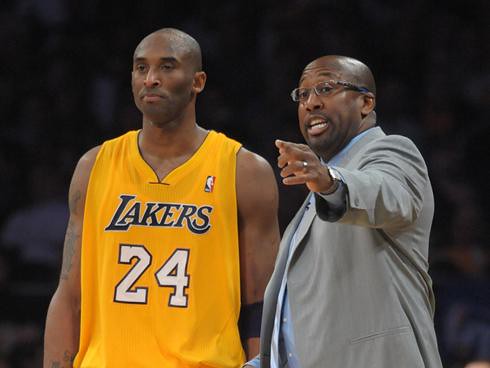
All of those things considered, I feel this is the best team in the West. I know that Nash will be 39 when the playoffs start, however, his job should be much easier. Rather than being one of the first scoring options like last season, he’ll likely be the 4th option this year depending on the lineup. And as for defense, Dwight will ensure that anyone who wonders into the paint will have to dramatically change their shot. Also, if Kobe continues his shooting barrage from last year (which I’m sure he will) they now have a center that’s more than happy to chase down all those misses. Where Bynum would mail in performances, I expect Howard to thrive under the big lights. I mean you could double team him, but that leaves Kobe, Pau, Nash or at times Metta. As much as I hate to say it…this starting five it almost too good.
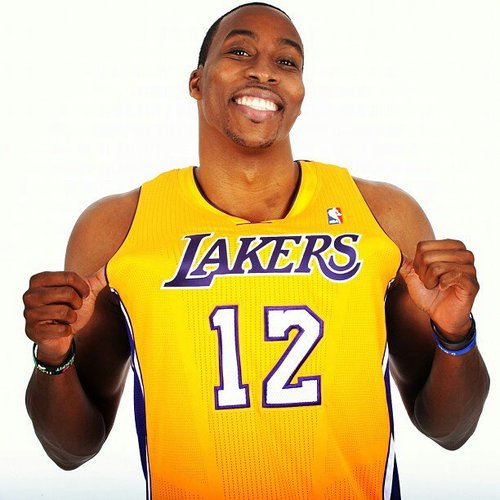
The Dwightmare has finally come to an end. Well, except for fans of the Orlando Magic. By now I’m sure most of you are well aware of the moving parts involved, so I won’t get too deep into the specifics for this piece. But I will say this. This trade will ensure the Magic will continue to be used as a farm system for Hall of Fame Centers to be harvested by the Lakers. The Magic suck themselves into the number 1 pick. They draft Nerlens Noel. He grows into an All Star and the best center in the NBA. Once he hits his prime (and free agency) he’ll bolt for Los Angeles. There he’ll go on to win two or three championships. No one will be surprised except for Magic season ticket holders. The Magic might want to consider taking Shabazz Muhammad just to break the cycle. We just witnessed three teams have their way with Orlando. I don’t want to type what this trade looks like, but I’ll just say it rhymes with “rang gape”. (Too harsh?)
Meanwhile, this guy chose to look the other way.
Dwight’s back being in worse shape than expected.
Nash’s back being in worse shape than expected.
Kobe continuing his quest to become T-Mac vol 2.
Mike Brown.
Let’s keep the defense on their toes. This time, I want you to hand it
off to Dwight and let him throw the
lob to Nash.
All of those things considered, I feel this is the best team in the West. I know that Nash will be 39 when the playoffs start, however, his job should be much easier. Rather than being one of the first scoring options like last season, he’ll likely be the 4th option this year depending on the lineup. And as for defense, Dwight will ensure that anyone who wonders into the paint will have to dramatically change their shot. Also, if Kobe continues his shooting barrage from last year (which I’m sure he will) they now have a center that’s more than happy to chase down all those misses. Where Bynum would mail in performances, I expect Howard to thrive under the big lights. I mean you could double team him, but that leaves Kobe, Pau, Nash or at times Metta. As much as I hate to say it…this starting five it almost too good.
Ugh, I just threw up in my mouth a little bit.
I’m hearing that Dwight may not be back in the lineup until January or February at the latest because of his back surgery. That could delay the impending doom that’s in place for rest of the league. With the recent signing of Antwan Jamison, the Lakers can start the season with Nash, Kobe, Metta, Jamison, and Gasol. Not the greatest of lineups, but still very solid. If I were a Laker fan, one of my concerns would be the bench. The Lakers managed to resign Jordan Hill who gave them solid contributions off the bench last year. They also picked up free agent Jodie Meeks on the cheap. Other than that, things are looking pretty thin until Dwight can make his way back. Last season the Lakers were ranked 13th in defensive efficiency. Nash and Jamison starting won’t improve those numbers. Because of this, I predict the Lakers will finish 2nd in the Conference with a final record of 58-24.
Greatness was a birthright for OJ Mayo. He began his basketball career by playing for the varsity squad at Rose Hill Christian High School where he averaged 23.1 points per game...He was also in the seventh grade. After moving to Cincinnati to live with his grandfather, OJ went on to earn the title Mr. Basketball of Ohio. He appeared on several magazine covers and Dime Magazine even crowned him "The Next Lebron". He later moved on to Huntington High School in West Virginia were he along with Patrick Patterson would lead the team to the State Championship. After signing his letter of intent to USC, Mayo scored a 29 on his ACT. OJ Mayo won high school.
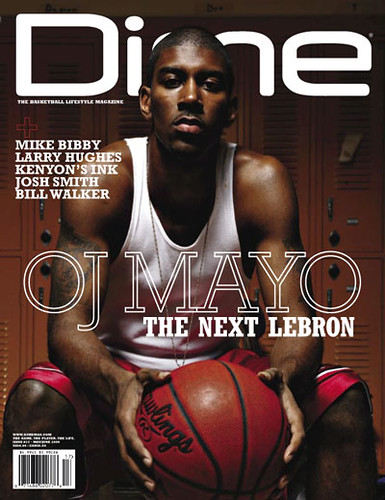
July 12, 2010: The Memphis Grizzlies sign Shooting Guard Tony Allen.
The arrival of Tony Allen meant the Grizzlies would be getting the NBA equivalent of a honey badger in their back court. Allen’s defense on the perimeter added an element that was sorely lacking from the Grizzlies. By Mayo’s third season he had lost his starting job. Lionel Hollins envisioned Mayo as a Jason Terry like 6th man who would come off the bench and be instant offense. However, it was obvious that he struggled with this new role. His shooting percentage saw a decline from 45% down to a dismal 40%. Future Bron was now only scoring 11.6 ppg. Fun fact: In the 2010-2011 season OJ Mayo went scoreless 4 times. Also, he scored 6 points or less 18 times. None of which can top the embarrassment of having your ass kicked by the guy taking your minutes. That’s what happened in January of 2011. While on the team plane, Allen apparently ordered Mayo to pay his debt from a card game, but Mayo refused. Mayo then began to berate Allen. And then Allen did what any bad ass would do in that situation. Kick the shit out of the shit talker.
Starting job taken: check
Minutes taken: check
Ass kicked and I’ll assume passed out on the floor and pockets rummaged through: check
(That last bit probably didn’t happen but the mental image is hilarious)
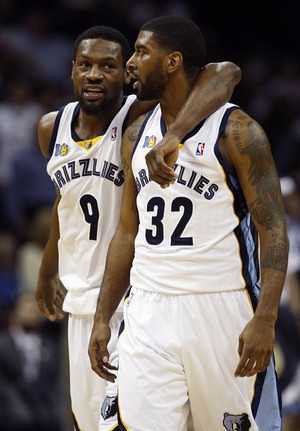
Last season Mayo was thoroughly relegated to 6th man duty. After starting 17 games the previous season, he started zero games this go around. He managed to improve his scoring from 11.6 to 12.3 points per game. The Grizzles went 41-25 in the lockout shortened season and where matched up against the Clippers in the Playoffs. There is no way to sugar coat it. OJ Mayo was downright atrocious. After shooting 31% for 6 games, Mayo went 1-11 in game 7. SMFH. 1-11 equals 9% from the floor. NINE PERCENT. With that, Mayo punched his ticket out of town. The Grizzlies declined to sign him to an offer sheet and Mayo became an unrestricted free agent
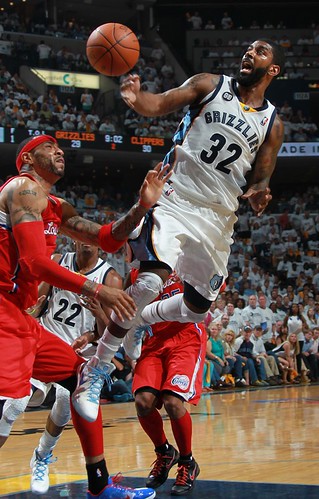
Next Lebron? So he’s gonna start balding at 23?
Side Note: That’s right, another Lebron bald joke. Deal with it.
After leaving USC in a wake of fire and destruction, Mayo was selected 3rd in the NBA draft by the Minnesota Timberwolves. OJ plus some rag tag spares were then traded to the Memphis Grizzlies for Kevin Love featuring some more rag tag spares. In his rookie season, OJ started every game playing 38 minutes a contest. He averaged 18.5 ppg 3.8 rebounds, 3.2 assist and shot 38% from three. He was the runner up to Derrick Rose in Rookie of the Year voting. By the end of the season it appeared that David Khan had been outsmarted...yet again. Ovinton J'Anthony followed his strong rookie campaign with averages of 17.5 points, 3.8 rebounds, and 3.0 assist. His career was off to a great start. Perhaps not "Next Lebron" great, but still very good.July 12, 2010: The Memphis Grizzlies sign Shooting Guard Tony Allen.
The arrival of Tony Allen meant the Grizzlies would be getting the NBA equivalent of a honey badger in their back court. Allen’s defense on the perimeter added an element that was sorely lacking from the Grizzlies. By Mayo’s third season he had lost his starting job. Lionel Hollins envisioned Mayo as a Jason Terry like 6th man who would come off the bench and be instant offense. However, it was obvious that he struggled with this new role. His shooting percentage saw a decline from 45% down to a dismal 40%. Future Bron was now only scoring 11.6 ppg. Fun fact: In the 2010-2011 season OJ Mayo went scoreless 4 times. Also, he scored 6 points or less 18 times. None of which can top the embarrassment of having your ass kicked by the guy taking your minutes. That’s what happened in January of 2011. While on the team plane, Allen apparently ordered Mayo to pay his debt from a card game, but Mayo refused. Mayo then began to berate Allen. And then Allen did what any bad ass would do in that situation. Kick the shit out of the shit talker.
Starting job taken: check
Minutes taken: check
Ass kicked and I’ll assume passed out on the floor and pockets rummaged through: check
(That last bit probably didn’t happen but the mental image is hilarious)
If this were the TV show Oz, Allen would be Schillinger and Mayo would be Beecher
Must. Not. Suck…ARRGGHHH!!
This past July, Mayo signed a 2 year 8.5 million dollar contract with the Dallas Mavericks. The second year being a player option. The way this contract is set up tells me that OJ sees himself as a player who is worth much more that what he’s currently playing for. With what is basically a 1 year deal, he gives himself a chance to sign a large contract next summer. The Mavs need for a reliable second option in the wake of Jason Terry’s departure, gives Mayo the opportunity to shine in the starting role he once thrived in. So far as the number 3 pick, OJ has been a bit of a failure. I however feel it may be a little too early to label him a bust. Mayo is at a bit of a crossroads in his career. Going into his fifth season he hasn’t been able to establish what he may become as a professional. This upcoming season could potentially make or break his legacy.
Hi all,
Now that we've established Jason as reasonably regular contributor, it's time to try to take some of the weight off his shoulders and try out a new guy.
Below is the first submission of a fellow who we shall know as "Paul." And no, he's not the Seth-Rogen-voiced alien from that Simon Pegg movie. He's waaaaay deeper than that - in fact, he and I both agree that the subject matter for this piece is a bit heavy, but it's summertime, and we're experimenting. I've asked Paul to start the gears-grinding on his next item, and we'll see how things develop. In the meantime, constructive criticism and / or thoughtful praise welcome.
ET
*****************************************
Minnesota.
What image just popped into your head? If it was lakes, Twins, malls, Vikings, Timberwolves, Golden Gophers, or Michelle Bachmann, then try again. The correct answer is “snow.” I need snow to be the answer because it fits with my main point, which is that it snows a lot in Minnesota, snow is usually white, and so is the new Minnesota Timberwolves team.
Now that most NBA free agents have signed and the dust has begun to settle on the roster make-up of next year’s NBA, it has become clear that the 2012-13 Timberwolves will set the record for the most minutes of on-court white-outs since the 1950s. I have no statistics to back that up (partly because the NBA didn’t start keeping that stat until 1961) but I’m pretty sure it’s true. At the very least, the Timberwolves’ new look will be a topic of discussion. Just google “Minnesota Timberwolves whitest team” and you’ll see message boards already lighting up. I assume that in six months, Minnesota will outpace Duke in getting referred to as “scrappy,” “gym rats,” or “great shooters.” Metta World Peace might even request a trade to Minnesota so he can call himself “Obama!”

Technically, the Timberwolves are actually one of the most diverse and multiethnic teams in the league. Their vanilla comes in many different varieties, including Spanish (Rubio) Montenegrin (Pekovic) Russian (Kirilenko and Shved) U.S.-Commonwealth-of-Puerto Rican (Barea) and American (Love, Budinger, Ridnour, Hummel). But here in the United States, we view our NBA ethnicity the way we like our coffee: mostly black with a little cream and absolutely nothing else allowed. Not even the influx of international players has eliminated our basic two-color system.
There are important discussions to be had here. I mean, have you ever found it strange that if a person has racially mixed parents (one of them white), they are never, ever referred to as “white”? (I’m going to pretend for the sake of that last point that I don’t remember Jay-Z’s line, “My president is black, in fact, he’s half-white”). Our system of ethnic construction is still based on the old racist European colonial model of white as “pure” and everything else as a deviation. We could have an intelligent discussion about that. We could try to understand the history and culture behind our ethnic classifications, and attempt to be more nuanced about them. Or we could just kind of ignore it. After all, if NBA fans were to discuss that stuff, we would be taking away from the college professors who need something to lecture on while their students check Twitter and Facebook. And besides, Hanes underwear isn’t going to sell itself. It’s easier to be like Mike, oblivious to the racial connotations of even the most sacred of facial hair atrocities.
So in keeping with the status quo of thinking in purely black and white terms, and throwing in an oh-so-timely Olympic angle to boot, I’ll ask you another question. Since the time of those McDonald’s “gold medal meal” commercials which U.S. Olympic basketball team has had the most white players?
Yup. The original 1992 Dream Team had twice as many white players (4) than the total number of white players in all the U.S. Olympic teams since. I’m sure there is a race card to be played somewhere in that information, and I’d prefer if it could be used against Kobe Bryant in some way. Something like this: did Kobe say the 2012 team could beat the Dream Team because he’s a black supremacist?
On the flip side of the racism coin, if you are a white supremacist who is disappointed that the 2012 U.S. team has only one white player, then I suggest that you purchase NBA League Pass next year or move into the Timberwolves television market. Your eyes are going to tell you it’s the 1950s all over again…even though what you’ll actually be watching is a striking example of modern diversity and globalization. (Breaking News: Guess where Greg Stiemsma is going to play next year)
Now that we've established Jason as reasonably regular contributor, it's time to try to take some of the weight off his shoulders and try out a new guy.
Below is the first submission of a fellow who we shall know as "Paul." And no, he's not the Seth-Rogen-voiced alien from that Simon Pegg movie. He's waaaaay deeper than that - in fact, he and I both agree that the subject matter for this piece is a bit heavy, but it's summertime, and we're experimenting. I've asked Paul to start the gears-grinding on his next item, and we'll see how things develop. In the meantime, constructive criticism and / or thoughtful praise welcome.
ET
*****************************************
Timberwolves and Whiteness
Minnesota.
What image just popped into your head? If it was lakes, Twins, malls, Vikings, Timberwolves, Golden Gophers, or Michelle Bachmann, then try again. The correct answer is “snow.” I need snow to be the answer because it fits with my main point, which is that it snows a lot in Minnesota, snow is usually white, and so is the new Minnesota Timberwolves team.
Now that most NBA free agents have signed and the dust has begun to settle on the roster make-up of next year’s NBA, it has become clear that the 2012-13 Timberwolves will set the record for the most minutes of on-court white-outs since the 1950s. I have no statistics to back that up (partly because the NBA didn’t start keeping that stat until 1961) but I’m pretty sure it’s true. At the very least, the Timberwolves’ new look will be a topic of discussion. Just google “Minnesota Timberwolves whitest team” and you’ll see message boards already lighting up. I assume that in six months, Minnesota will outpace Duke in getting referred to as “scrappy,” “gym rats,” or “great shooters.” Metta World Peace might even request a trade to Minnesota so he can call himself “Obama!”
The publication of this picture caused the cultural revolution of the 1960s
Technically, the Timberwolves are actually one of the most diverse and multiethnic teams in the league. Their vanilla comes in many different varieties, including Spanish (Rubio) Montenegrin (Pekovic) Russian (Kirilenko and Shved) U.S.-Commonwealth-of-Puerto Rican (Barea) and American (Love, Budinger, Ridnour, Hummel). But here in the United States, we view our NBA ethnicity the way we like our coffee: mostly black with a little cream and absolutely nothing else allowed. Not even the influx of international players has eliminated our basic two-color system.
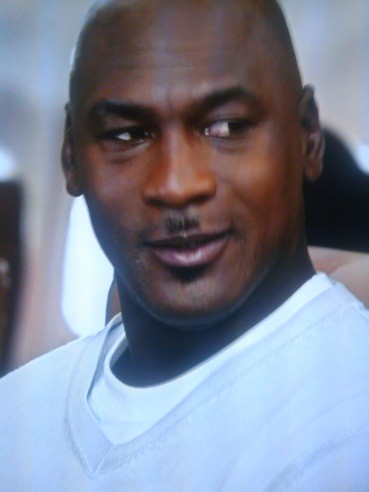
There are important discussions to be had here. I mean, have you ever found it strange that if a person has racially mixed parents (one of them white), they are never, ever referred to as “white”? (I’m going to pretend for the sake of that last point that I don’t remember Jay-Z’s line, “My president is black, in fact, he’s half-white”). Our system of ethnic construction is still based on the old racist European colonial model of white as “pure” and everything else as a deviation. We could have an intelligent discussion about that. We could try to understand the history and culture behind our ethnic classifications, and attempt to be more nuanced about them. Or we could just kind of ignore it. After all, if NBA fans were to discuss that stuff, we would be taking away from the college professors who need something to lecture on while their students check Twitter and Facebook. And besides, Hanes underwear isn’t going to sell itself. It’s easier to be like Mike, oblivious to the racial connotations of even the most sacred of facial hair atrocities.
Only MJ could get away with the Hitler-stache
So in keeping with the status quo of thinking in purely black and white terms, and throwing in an oh-so-timely Olympic angle to boot, I’ll ask you another question. Since the time of those McDonald’s “gold medal meal” commercials which U.S. Olympic basketball team has had the most white players?
Yup. The original 1992 Dream Team had twice as many white players (4) than the total number of white players in all the U.S. Olympic teams since. I’m sure there is a race card to be played somewhere in that information, and I’d prefer if it could be used against Kobe Bryant in some way. Something like this: did Kobe say the 2012 team could beat the Dream Team because he’s a black supremacist?
On the flip side of the racism coin, if you are a white supremacist who is disappointed that the 2012 U.S. team has only one white player, then I suggest that you purchase NBA League Pass next year or move into the Timberwolves television market. Your eyes are going to tell you it’s the 1950s all over again…even though what you’ll actually be watching is a striking example of modern diversity and globalization. (Breaking News: Guess where Greg Stiemsma is going to play next year)
Word of the Day
Links
Archive
January 2005February 2005
October 2005
November 2005
December 2005
January 2006
February 2006
March 2006
April 2006
May 2006
June 2006
July 2006
August 2006
September 2006
October 2006
November 2006
December 2006
January 2007
February 2007
March 2007
April 2007
May 2007
June 2007
July 2007
August 2007
September 2007
October 2007
November 2007
December 2007
January 2008
February 2008
March 2008
April 2008
May 2008
June 2008
July 2008
August 2008
September 2008
October 2008
November 2008
December 2008
January 2009
February 2009
March 2009
April 2009
May 2009
June 2009
July 2009
August 2009
September 2009
October 2009
November 2009
December 2009
January 2010
February 2010
March 2010
April 2010
May 2010
June 2010
July 2010
August 2010
September 2010
October 2010
November 2010
December 2010
January 2011
February 2011
March 2011
April 2011
May 2011
June 2011
July 2011
August 2011
September 2011
October 2011
November 2011
December 2011
January 2012
February 2012
March 2012
April 2012
May 2012
June 2012
July 2012
August 2012
September 2012
October 2012
November 2012
December 2012
January 2013
February 2013
March 2013
April 2013
May 2013
June 2013
July 2013
August 2013
September 2013
October 2013
November 2013
December 2013
April 2014
May 2014
June 2014
July 2014
August 2014
June 2018
July 2022
contact: basketbawful@yahoo.com